The legal medical and adult-use cannabis industry sectors are ramping up in size and scope in many parts of the world, particularly in North America. Canada legalized cannabis for adult use nationwide in 2018, and forty states in the U.S. have legalized medical cannabis, recreational cannabis, or both.
Many Indigenous nations in North America are also permitting cannabis production and commerce to occur, which has led to the creation of the Indigenous Cannabis Industry Association (ICIA).
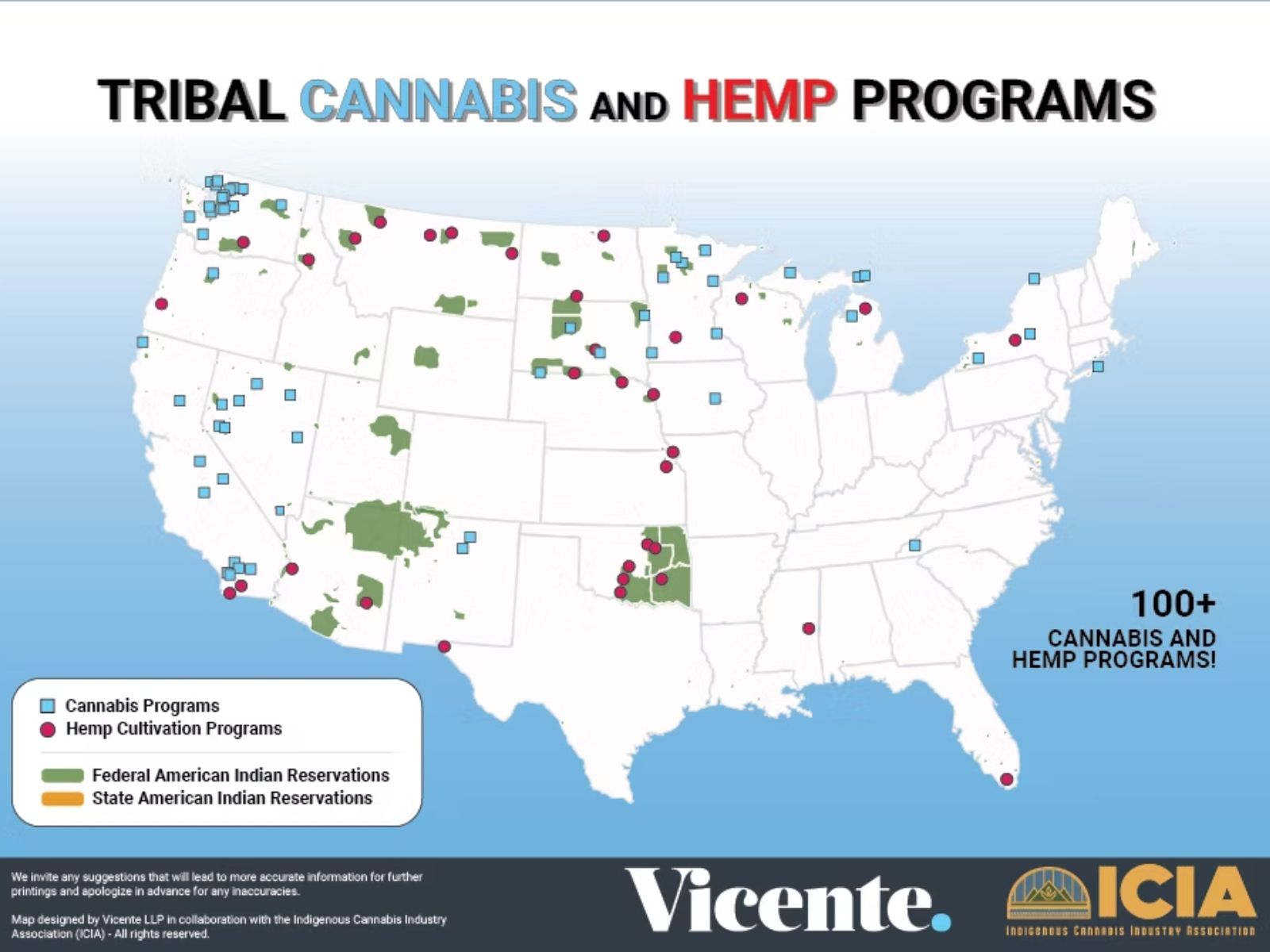
“Our mission is to create opportunities and equity for our Indigenous people while empowering our communities through policy, programming, and outreach initiatives.” states the industry advocacy organization on its website. The organization has published the following map, listing Indigenous nations actively involved in the emerging cannabis industry:
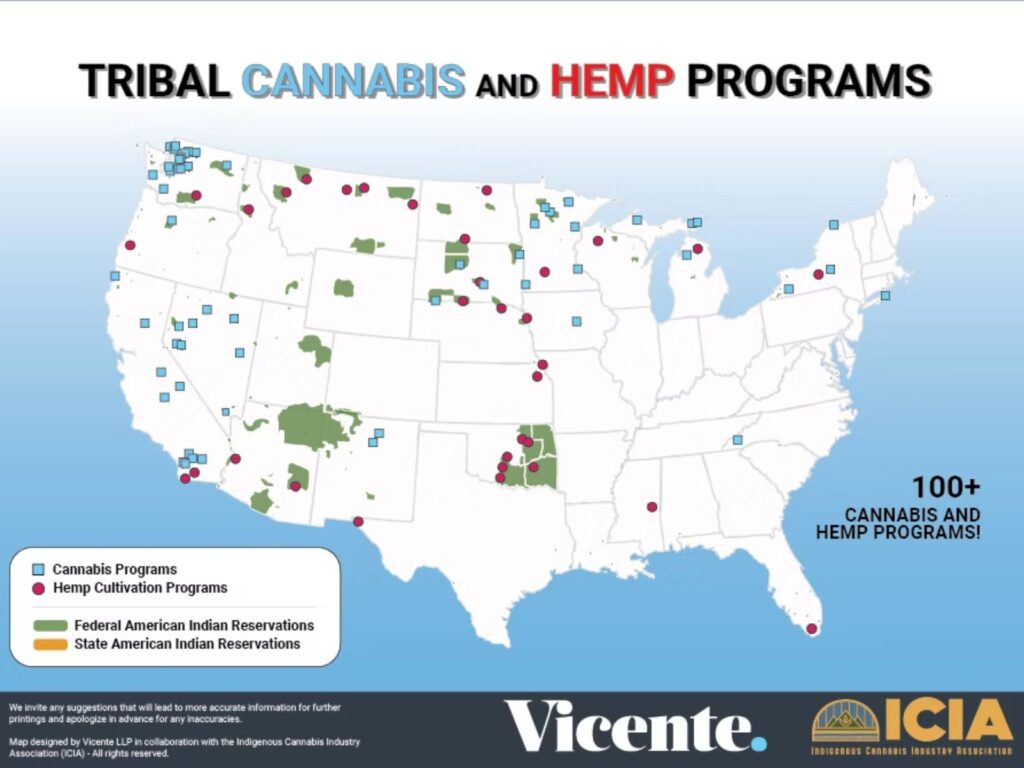
“Since the first regulated Indigenous cannabis storefront opened almost 10 years ago in Washington state, dozens of sovereign Indigenous communities have created their own unique regulatory systems to govern cannabis cultivation, production and sales. In addition to cannabis, 52 Tribal communities operate federally approved hemp cultivation programs. With 574 federally recognized Indigenous communities nationwide and 358 in the continental United States, approximately 26% of Indigenous communities in the continental U.S. are involved with cannabis or hemp programs.” ICIA states.
Dozens of Indigenous nations in Canada have also legalized cannabis production and commerce, although there are still policies and regulations in Canada that hinder some Indigenous nations from launching legal cannabis companies.
“Provincial and territorial retail frameworks vary considerably, and offer different levels of opportunity for First Nations, Inuit, and Métis participation. In some provinces and territories, opportunities for First Nations, Inuit, and Métis participation are not possible due to the government-run retail market. In other jurisdictions, with private retail models there are mixed results.” Health Canada states.